Arlington National Cemetery’s Memorial Arboretum Walking Tour
Walking tour of the Memorial Arboretum Arlington National Cemetery
By Emily Rheault
Featuring historical photos from Warnecke Archives
Among the 400,000 graves at Arlington National Cemetery stand nearly 9,000 trees, some older than the cemetery itself. In 2014, this historic landscape was formally established as the Memorial Arboretum an honor shared by only a handful of institutions worldwide.
The Memorial Arboretum Walking Tour is a self‑guided, 2.5‑mile route that weaves together horticulture, history, and memory. Eleven stops highlight historic and champion trees, changing ideas about cemetery design, and the ways Arlington’s landscape has been shaped by war, slavery, and commemoration. Visitors encounter:
Living memorials, like the American Chestnut Foundation Tree and the 143 official Memorial Trees dedicated to units, battles, and service organizations.
Historic giants, such as the surviving 250‑year‑old white oak and the progeny of the legendary Arlington Oak.
Designed and naturalistic landscapes, from the intimate, highly composed spaces around the Tomb of the Unknown Soldier to broad “rural cemetery” vistas of rolling hills and groves.
Throughout, the Arboretum’s horticulture team uses the grounds as a living laboratory—supporting research, conservation, and careful maintenance of each tree’s health and history.
The Warnecke Connection: John F. Kennedy Gravesite
For the Warnecke archives, one stop on this tour is especially significant: Stop 3 – Arlington Oak / John F. Kennedy Gravesite.
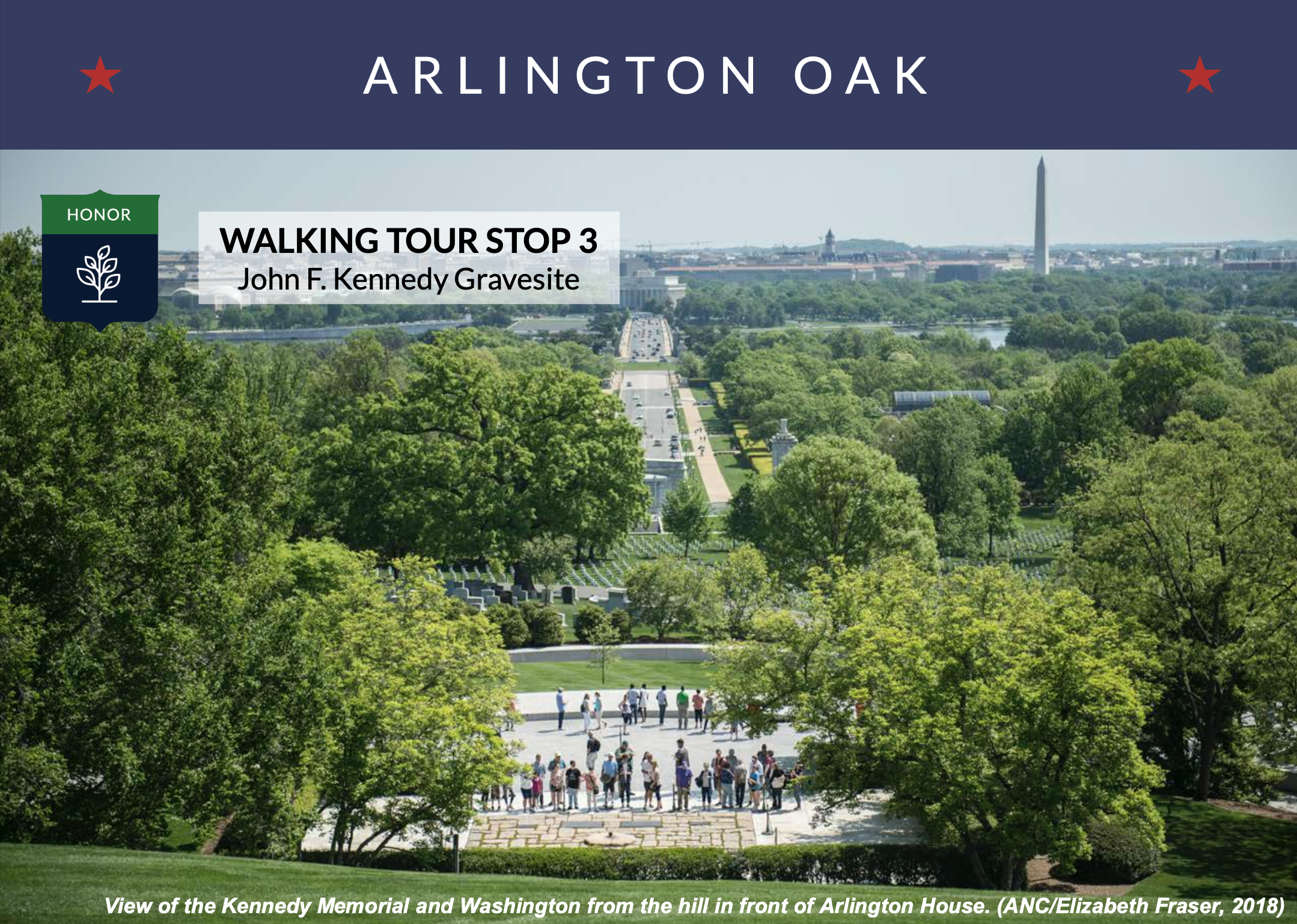
President John F. Kennedy visited Arlington National Cemetery in March 1963. Looking at the view of Washington, D.C. from the hill by Arlington House, he is reported as saying, “I could stay here forever.” Eight months later, he was assassinated.
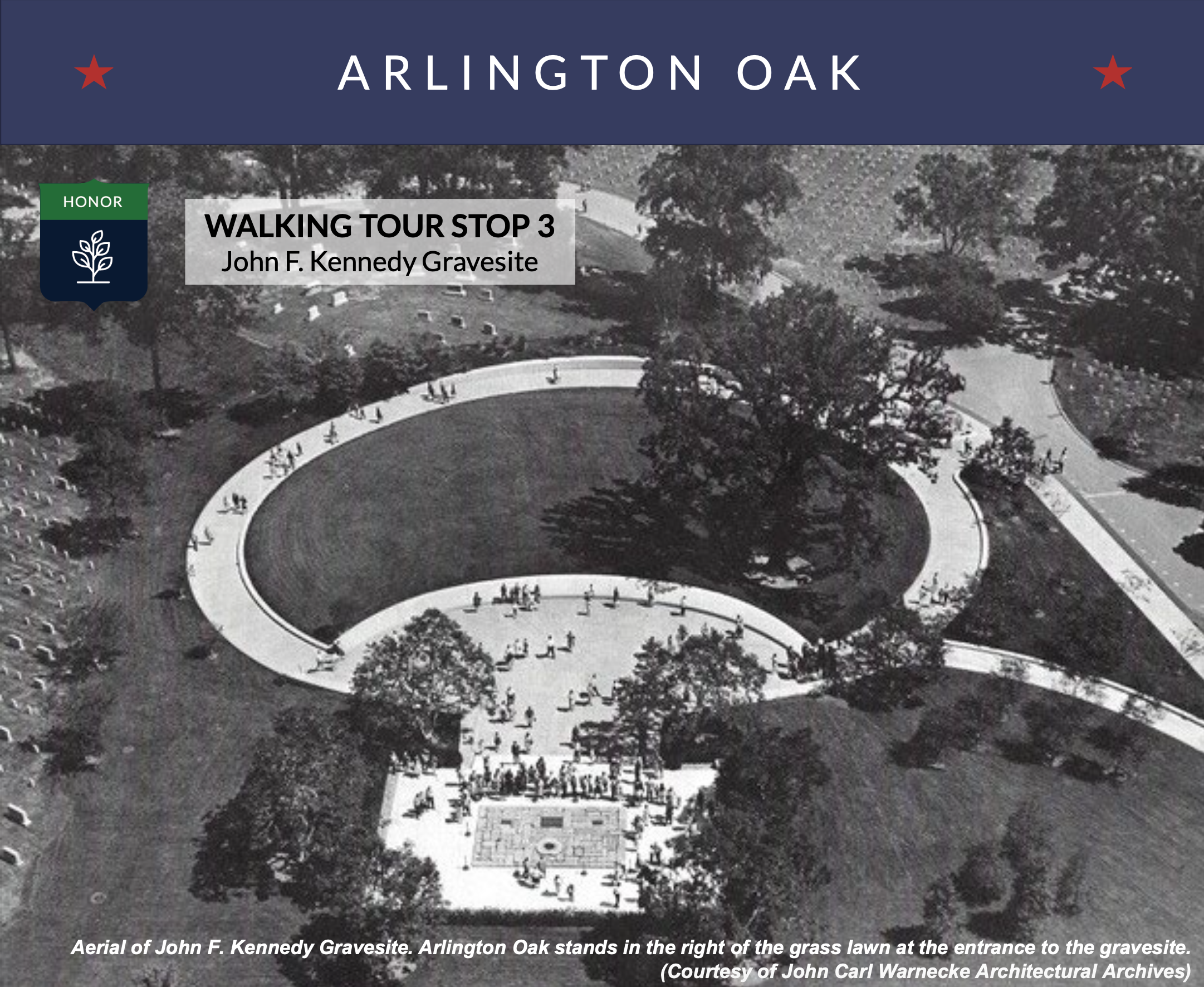
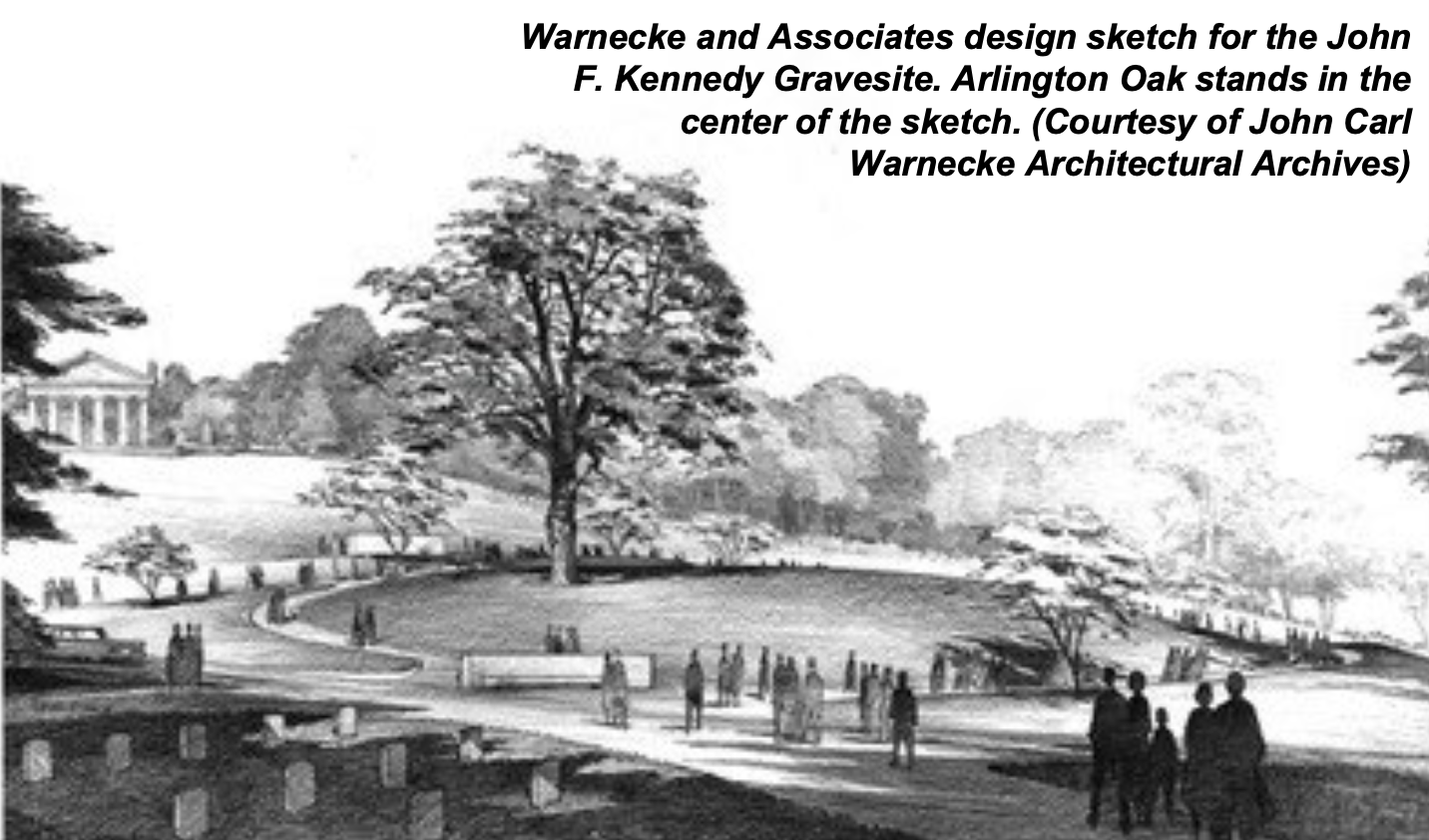
After his death, Kennedy’s family knew they wanted to inter him at this spot. In 1963, Jacqueline Kennedy hired John Carl Warnecke to design the memorial and surrounding landscape that you see today. Inspired by the 170-year-old Arlington Oak, Warnecke designed the memorial around the oak. In the final design, the post oak featured prominently. It served as a natural focal point and offered its beauty and shade to visitors for the next 48 years.
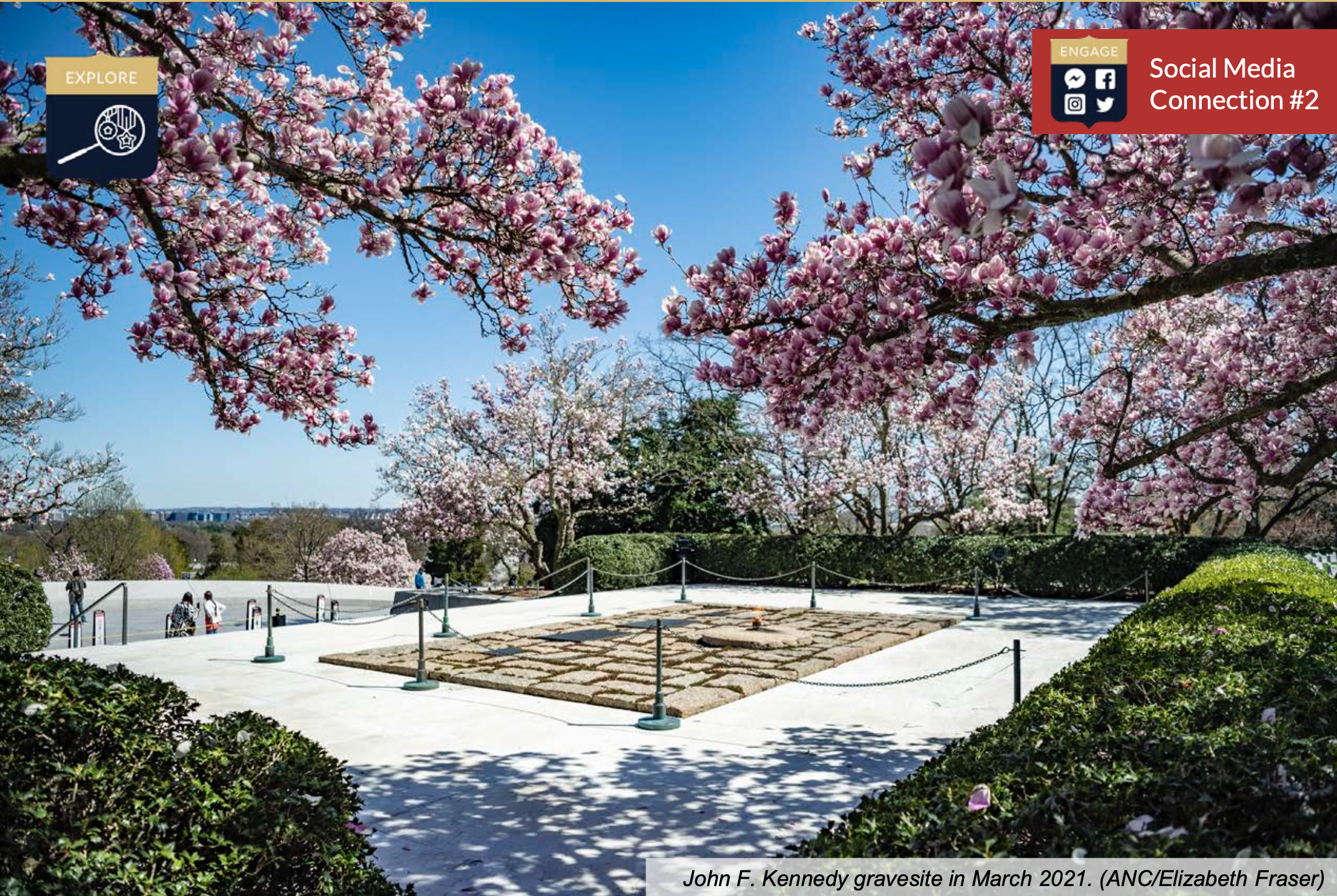
President John F. Kennedy’s gravesite is one of the few formally designed landscapes in Arlington’s otherwise naturalistic landscape.
Designed landscapes are intentionally designed by an architect, gardener or horticulturalist. Each landscape feature is chosen to help evoke a cohesive emotion. Every plant in this landscape was specifically chosen by Warnecke as part of his original design.
Warnecke’s design responded directly to the Arlington Oak, a 170‑year‑old post oak that once stood at the entrance to the gravesite. He treated the tree as the natural focal point of the memorial, shaping paths, views, and plantings around its canopy. The gravesite became one of the few fully formal landscapes within Arlington’s otherwise naturalistic grounds, using:
Saucer magnolias at the four corners
False holly hedges defining the space
Flowering crabapples marking the approach
Even after the Arlington Oak fell in 2011, its presence continues through saplings grown from its acorns—living reminders of the tree that inspired Warnecke’s design.
For visitors on the walking tour, the Kennedy gravesite illustrates how landscape architecture can shape emotion, ritual, and memory. For the Warnecke archives, it is a key case study in Warnecke’s contextual design approach: integrating modern memorial architecture with historic topography, long‑lived trees, and distant views of the capital.